Getting started with ramztracker
What ramztracker is, how the click-to-deposit funnel works, and the core concepts — spaces, links, canonical events and destinations — you need before you integrate.
ramztracker is a multi-tenant conversion tracker built for Telegram funnels and affiliate offers. It follows a user from the first ad click all the way to a deposit, records every step, and forwards those steps to whatever you need them in — Facebook CAPI, a webhook, or a server-to-server postback.
This guide explains the moving parts so the rest of the docs make sense.
The funnel
The canonical journey looks like this:
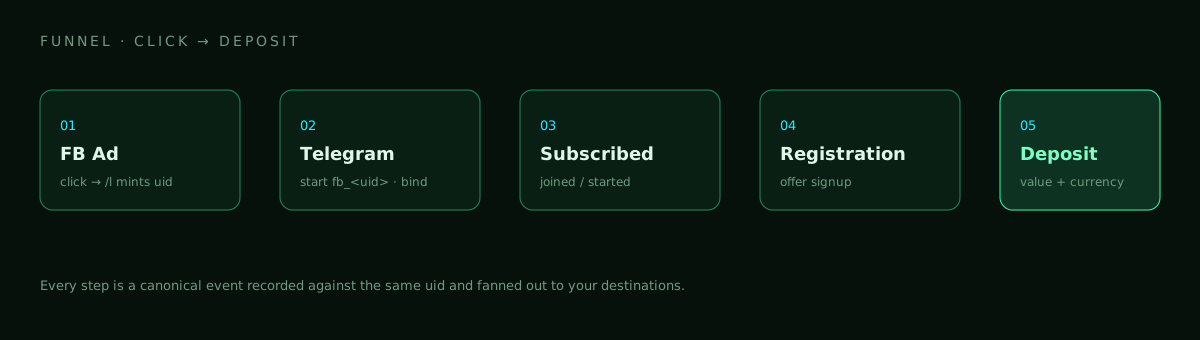
A Facebook ad sends the user to a landing that mints a unique uid. The deeplink carries that uid into your Telegram bot (t.me/<bot>?start=fb_<uid>). From there your app reports each conversion step against the same uid, and ramztracker stitches the whole path together.
The setup, at a glance
Four screens get you from zero to sending conversions:

Core concepts
Space
A space is one tenant — typically one offer or one funnel. Everything (links, keys, destinations, events) is scoped to a space, so data from different projects never mixes.
Link
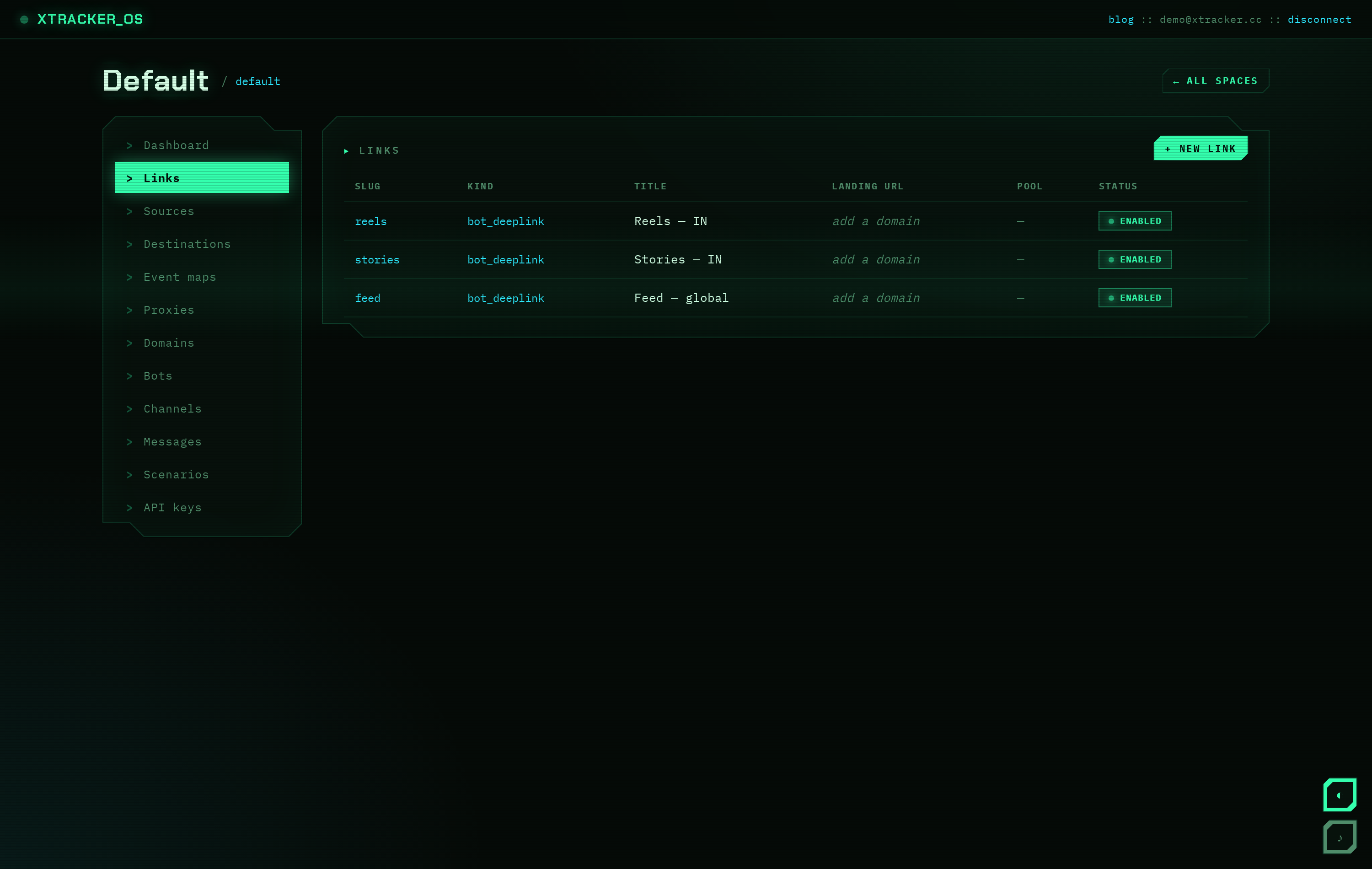
A link is a trackable entry point. It can be a bot deeplink, a Telegram channel, or a plain web URL. Each link has a slug and its own landing page; clicks on it mint uids.
Canonical events
Instead of a free-for-all of event names, ramztracker uses a small, fixed vocabulary. You always send one of these four:
| Event | Meaning |
|---|---|
contact |
first touch — opened the landing / started the bot |
subscribed |
joined the channel / started the bot |
registration |
registered on the offer |
deposit |
paid — the only event that carries value + currency |
Keeping the vocabulary closed is what makes reporting consistent across every destination.
Destination
A destination is where matched events go: Facebook CAPI, a generic webhook, or an S2S postback. You map each canonical event to the name that destination expects (e.g. deposit → Purchase for Meta) once, in the space's event maps — your app never has to know about destinations.
How delivery works
Events don't go straight out. They're written to a durable inbox first, then fanned out and retried until they land:
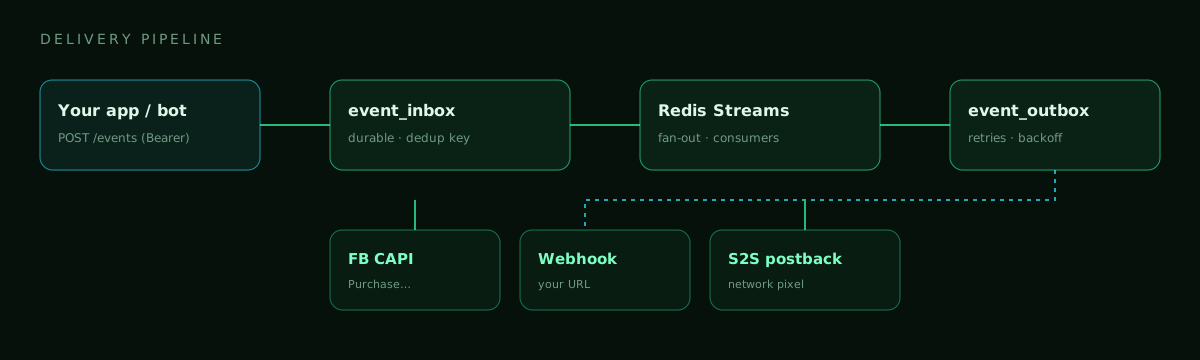
That means a momentary outage at a destination never loses a conversion — the outbox keeps retrying with backoff.
What's next
- Integrate your app in 10 minutes — keys, sending events, the Python client and postbacks.
- Pocket Option postback setup — wire deposits from a partner network with zero code.
Spin up a space, create a link, grab your keys, and you're ready to send your first event.
Keep reading
How to find and fix the leak in your funnel
A practical walkthrough: use the funnel breakdown and conversion gauge to pinpoint exactly where users drop off, form a hypothesis, fix one thing, and measure the lift.
PlaybookKeep your finger on the pulse: real-time conversion monitoring
A live dashboard isn't a vanity metric — it's an early-warning system. Here's how watching conversions in real time catches broken funnels and dead campaigns before they burn your budget.
PlaybookSame budget, more deposits: optimizing creatives with per-link data
Clicks lie. Deposits don't. Use per-link attribution to see which creative actually drives revenue — then move spend to the winner and kill the losers.